
Baldwin County Arrest Records and Court Charges
Arrest records in Baldwin County are law-enforcement records first. They may involve the Baldwin County Sheriff's Office, a city police agency, booking staff at the jail, or a report that later supports a prosecution. The Sheriff's Office is the county channel for arrest, booking, incident, accident, CAD, warrant, wanted-person, and jail-account records. Its headquarters and jail are listed at 119 Old Monticello Road NW, Milledgeville, GA 31061, and the official FAQ says a person can check whether someone has been arrested by calling booking at 478-445-2663.
A court charge record is narrower than the full criminal case file. Research for Baldwin County defines it as the filed charge, accusation, indictment, or count showing what offense is alleged after arrest or citation. It may appear in the Tyler court case portal, in a jail or booking response, in a sheriff open-records response, or in a prosecution file. It should not be treated as proof of conviction. For custody status and booking phone routes, use inmate records. For the larger case file, including pleas, disposition, sentence, probation, restitution, and fines or costs, use criminal court records.
The Baldwin County Sheriff's Office homepage is one source for arrest-side access points and public safety contact information.
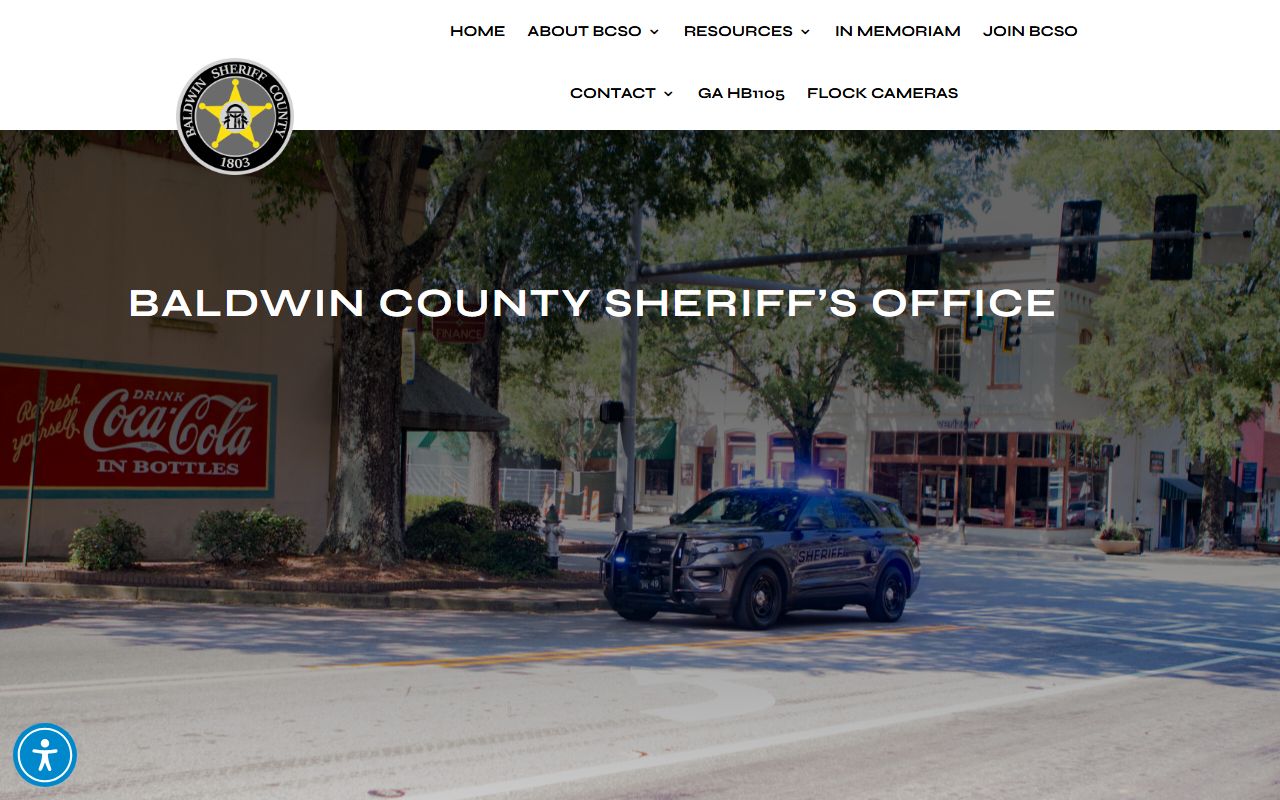
That sheriff channel matters because an arrest event can exist before the court charge record is complete or searchable through the clerk's civil and criminal case system.
How to Find Baldwin County Arrest Records and Charges
The court side starts with the Clerk of Superior Court page and the Tyler court case search for Baldwin County Clerk of Superior Courts civil and criminal records. The live portal is at docket.baldwincoga.com:7355/CourtsCMWS. The login screen offers registered-user fields, account creation, password recovery, and a public "Continue as Guest" option. Guest access leads to search routes for Search By Party, Search By Associated Party, and Search By Case Number. If the charge record does not appear online, the Clerk of Superior Court fallback is 121 N. Wilkinson Street, Milledgeville, or 478-445-6324.
- Open the Baldwin County Tyler court case search from the Clerk of Superior Court page or the direct portal URL.
- Choose the guest path unless a registered account is required for the specific task.
- Search by defendant name when the person is known, or by case number when the exact number is available.
- Review the criminal case entries for the accusation, indictment, warrant, plea, disposition, and sentence fields that are visible.
- If a charge is missing, ask the Clerk whether the file is older, sealed, transferred, not indexed online, or held by State, Magistrate, Juvenile, Probate, or Municipal Court.
For the arrest-side records, the Sheriff's Office provides an open-records request form for multiple documents or records, an incident or accident report request form for a single report, and a separate 911 CAD request form for dispatch records. Under Georgia's Open Records Act, public records are generally open for inspection and copying unless a statute, court order, juvenile-law rule, investigative exemption, personal identifier rule, or record-restriction law limits access.
The sheriff open-records form is the formal route for multiple law-enforcement records, including a checkbox for warrants.
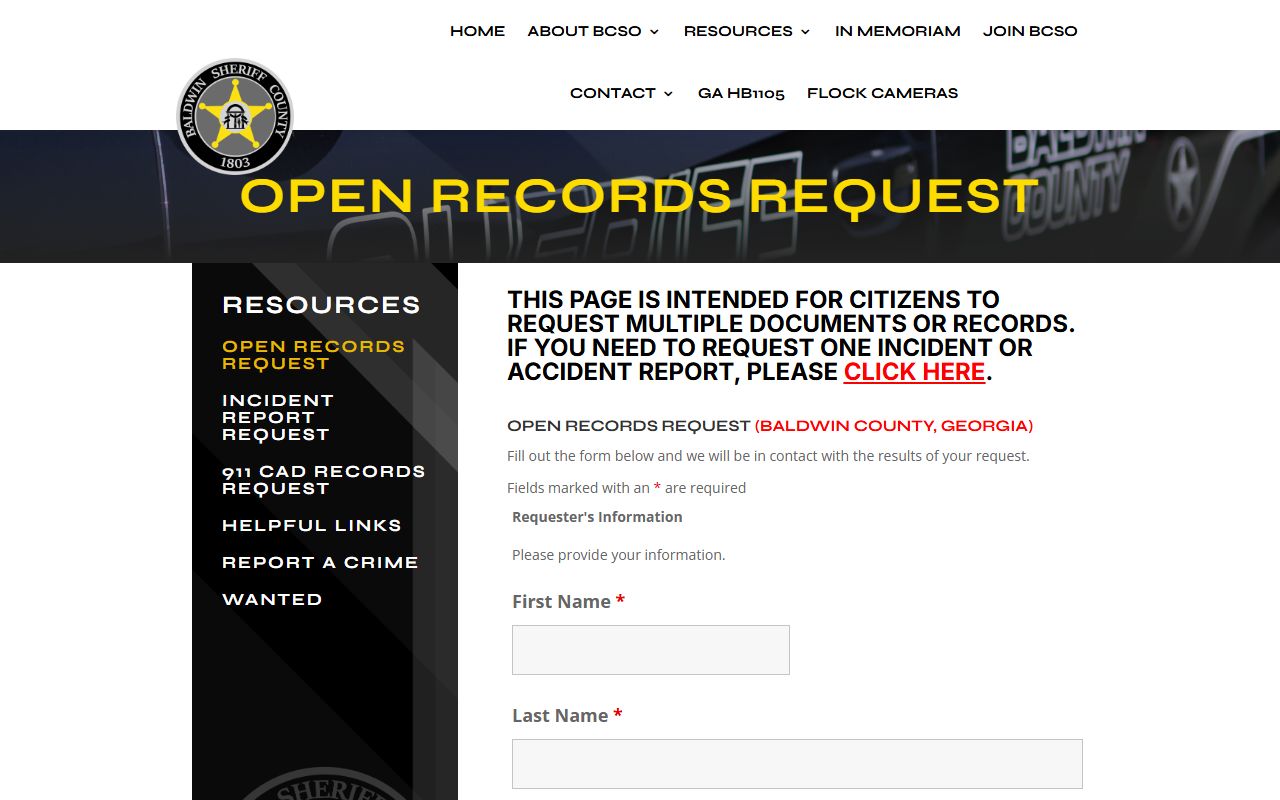
Use that request channel when a public portal does not provide the underlying arrest report, booking report, warrant material, or body-camera and in-car footage request option.
Charging Documents After an Arrest
Georgia and Baldwin County research use local terms that matter. An accusation is a charging document often used for misdemeanors. An indictment is a felony charging document returned by a grand jury. A warrant is a court order authorizing arrest, search, or another law-enforcement action. A bench warrant is issued by a judge, often after failure to appear, and a capias is an order to take a person into custody that is commonly tied to missed court obligations. One arrest can produce several separate counts, and each count may move differently through arraignment, plea, dismissal, amendment, or sentencing.
| Document or Entry | Common Baldwin County Use | Where to Check |
|---|---|---|
| Accusation | Often used for misdemeanor charges handled in State Court. | Tyler court case search, Clerk of Superior Court, or State Court prosecution records. |
| Indictment | Felony charging document returned by a grand jury for Superior Court cases. | Superior Court case file through the Clerk of Superior Court. |
| Warrant or warrant-based count | Arrest-warrant applications route through Magistrate Court; bench warrants may follow missed State Court or traffic obligations. | Magistrate Court, sheriff warrants staff, State Court Clerk, or court docket. |
| Citation | Traffic and some misdemeanor matters can begin by citation rather than custodial arrest. | State Court Clerk, payment and appearance pages, or court portal. |
The sheriff incident or accident report request form is the single-report route for an arrest-related incident report when the requester has enough identifying information.
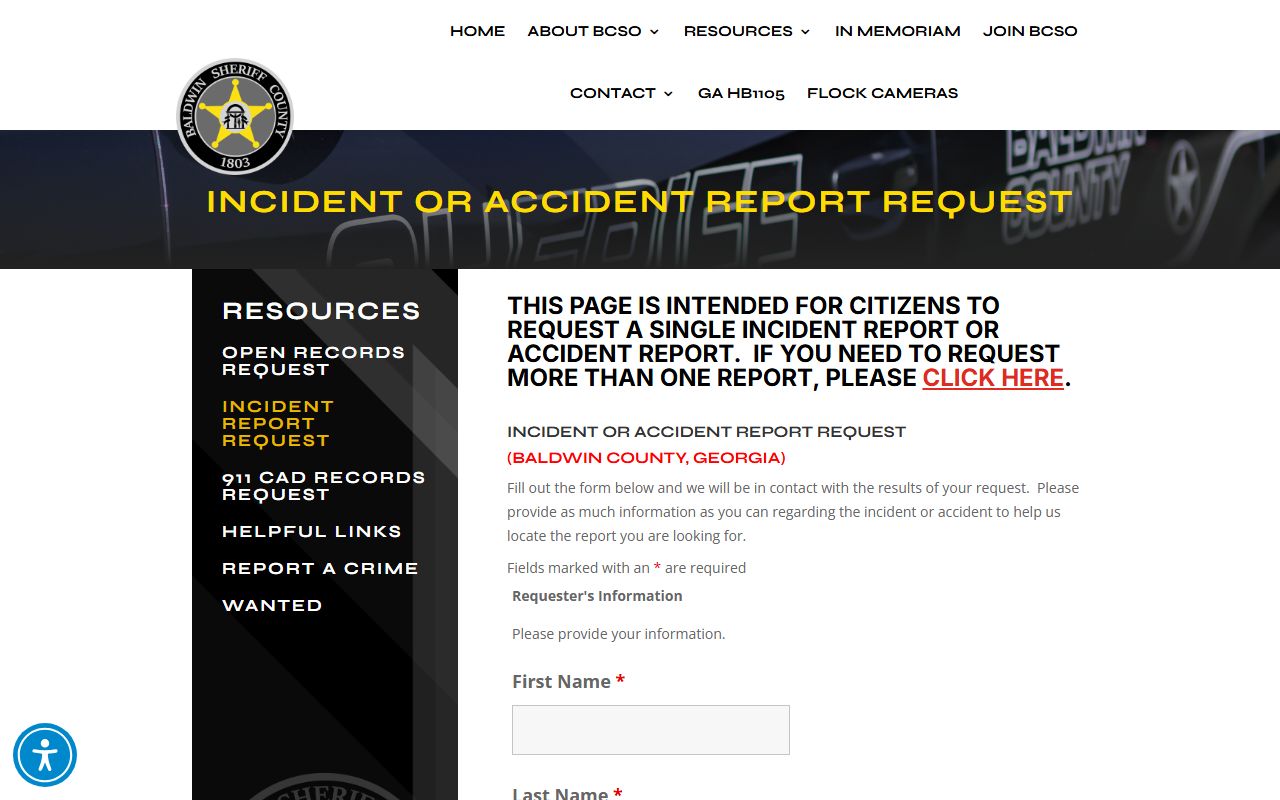
An incident report can explain the law-enforcement event, while the court charge record shows what the prosecutor or court ultimately filed.
Charge Status and What It Means
Charges can change after filing. The court record may show a charge as pending while the case is active, disposed after a plea or trial result, dismissed when the court or prosecutor ends that count, or modified when the original charge is reduced or amended. Baldwin research cautions that a charge record is not the same thing as a conviction. The current result is the disposition, and it should be read count by count.
| Status | What It Means | Record Note |
|---|---|---|
| Pending | The charge has not reached a final court result. | Check the docket for upcoming hearings, motions, arraignment, or trial settings. |
| Amended or reduced | The filed charge changed from the original count. | Compare the original charging document with later docket and disposition entries. |
| Dismissed | The count ended without conviction on that count. | Dismissal does not automatically erase every arrest-side record. |
| Nolle prosequi | The prosecutor declines to continue a charge. | Ask the prosecutor or clerk how the entry appears on certified records. |
| Disposed | The count or case has reached a current or final result. | Review whether the disposition is guilty, not guilty, dismissed, transferred, or another result. |
Charge vs. Conviction Comparison
Being arrested or charged in Baldwin County does not mean a person was convicted. A charge is an allegation filed into a court process. A conviction follows a guilty plea, a nolo contendere plea where applicable, or a guilty verdict. Court users should read the docket entries, plea entries, judgment, sentence, and disposition before drawing a conclusion from a charge list.
| Point of Comparison | Charge | Conviction |
|---|---|---|
| Stage | Allegation after arrest, citation, warrant, accusation, or indictment. | Final adjudication after plea, verdict, or judgment. |
| Proof | Not proof that the person committed the offense. | Shows guilt was entered or found on that count. |
| Where it appears | Court docket, charging document, sheriff records, or prosecution file. | Disposition, judgment, sentence, probation, fine, or restitution entries. |
| Record check risk | Can be misunderstood if read without disposition. | Still must be checked for appeals, restriction, sealing, or later correction. |
District Attorney and Solicitor Roles
The Ocmulgee Judicial Circuit District Attorney serves Baldwin County for felony Superior Court prosecution. The official Baldwin County DA page lists the office at 121 N. Wilkinson Street, Suite 305, Milledgeville, GA 31061, phone 478-445-5261, and identifies the office as the Ocmulgee Judicial Circuit District Attorney Office. Baldwin County State Court prosecution is separate. The county page names Skye Gess as State Court Solicitor General, phone 478-445-4445. Those prosecution offices decide or pursue the filed charges after arrest; they are not the same as the jail booking desk or the Clerk of Superior Court records counter.
That division is important for record restriction. Baldwin research notes that for arrests after July 1, 2013, GBI says there is no application process with the arresting agency and the person must contact the prosecutor to have the record restricted. For arrests before July 1, 2013, GBI says the person is required to apply for restriction at the arresting agency. In Baldwin County, that can mean the Sheriff's Office or Milledgeville Police Department, plus the DA or State Court Solicitor depending on the prosecution level.
Sheriff Record Request Channels
The Sheriff's Office provides several channels for arrest-adjacent records. Sarah Humphries is listed as Records Custodian at 478-445-2550 and shumphries@baldwinsheriff.com. The booking line for checking whether someone has been arrested is 478-445-2663. The sheriff open-records form includes request fields for accident reports, incident reports, booking reports, warrants, body-camera or in-car camera footage, and other records. Requesters can add a case number, incident or citation number, date, time, subject or victim names, incident address, and additional information.
| Need | Use This Channel | Research Limitation |
|---|---|---|
| Check if someone has been arrested | Booking phone, 478-445-2663. | No official public county jail roster was found in inspected pages. |
| Request multiple sheriff records | Sheriff open-records form. | Release may be limited by active investigation, juvenile, sealed, or personal-data rules. |
| Request one incident or accident report | Incident or accident report request form. | Best when the requester has case, date, subject, or incident details. |
| Request 911 dispatch records | 911 CAD records request form. | CAD records are separate from court charges and jail booking records. |
| Ask about warrants | Warrants staff, 478-445-2147 or 478-445-6184. | The sheriff wanted page is not a full warrant database. |
Courts That Can Hold Charge Records
Superior Court is the primary Baldwin County felony venue and is part of the Ocmulgee Judicial Circuit. State Court handles misdemeanor criminal cases, traffic matters, and civil matters assigned to that court. Magistrate Court handles arrest-warrant applications, bad-check warrants, evictions, non-domestic civil suits up to $15,000, and garnishments. Juvenile Court handles minors cited or arrested for alleged law violations, unruly or truancy matters, and dependency cases. Municipal matters for Milledgeville may sit with the city court system rather than the county courthouse.
The Baldwin County Magistrate Court page documents arrest-warrant applications, bad-check warrants, civil suits, evictions, and garnishments.
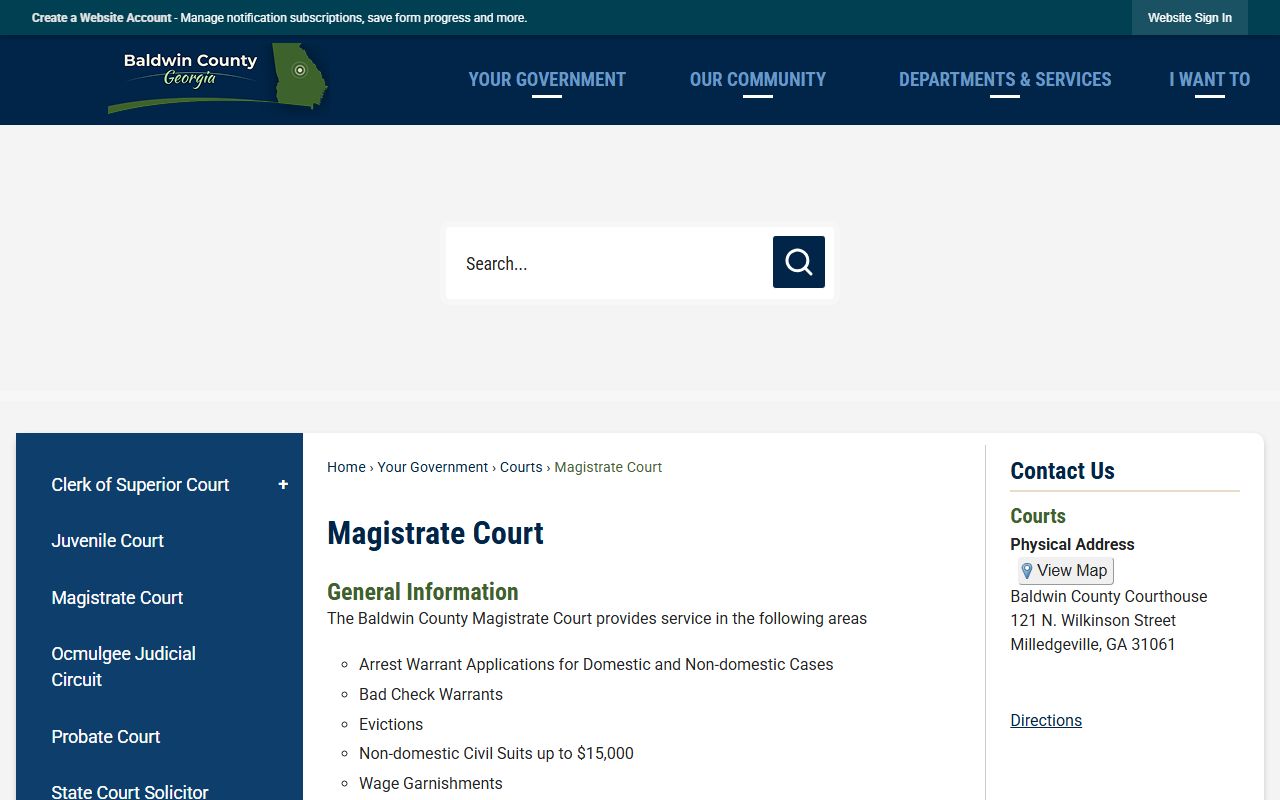
Magistrate Court is especially relevant when a court charge record is tied to a warrant application or a lower-court proceeding rather than a Superior Court felony indictment.
The Baldwin County Juvenile Court page is the local source for delinquency, unruly, truancy, dependency, abuse, and neglect matters involving minors.
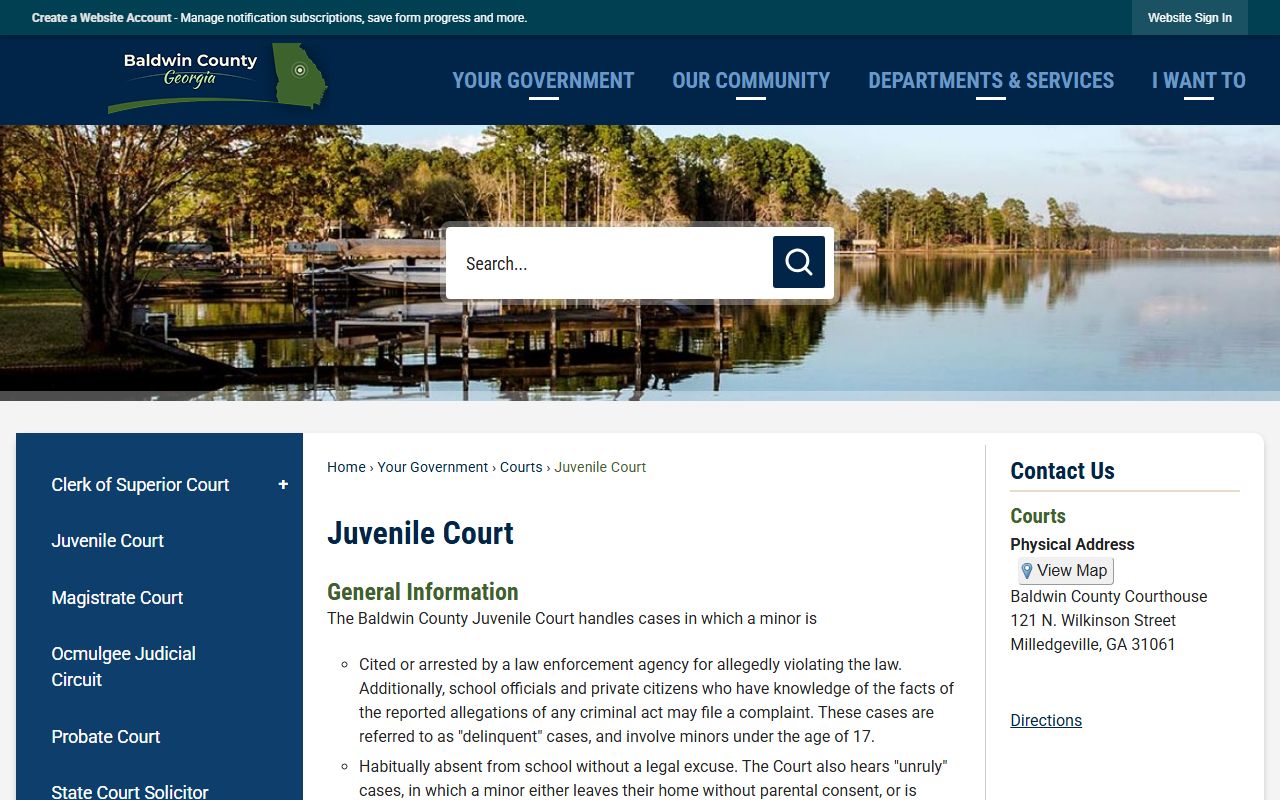
Juvenile charge records are not ordinary adult arrest records, so public access is narrower and should be confirmed with the proper court before requesting details.
Restricted Charge Records in Baldwin County
Georgia public-access rules make many records open, but the research identifies several limits. Juvenile records are treated differently and often restricted. Adoption files are not ordinary public family-court records. Probate mental-health commitment records are sensitive. Social Security numbers, financial account numbers, protected victim information, minor children's names, medical data, and sealed material should be redacted or withheld. Georgia record restriction under O.C.G.A. 35-3-37 does not destroy the criminal history. GBI and Georgia.gov sources explain that restricted records remain available to judicial officials and criminal-justice agencies.
Important: This site is not a consumer reporting agency and cannot be used for FCRA-regulated employment, tenant, credit, or insurance decisions.